


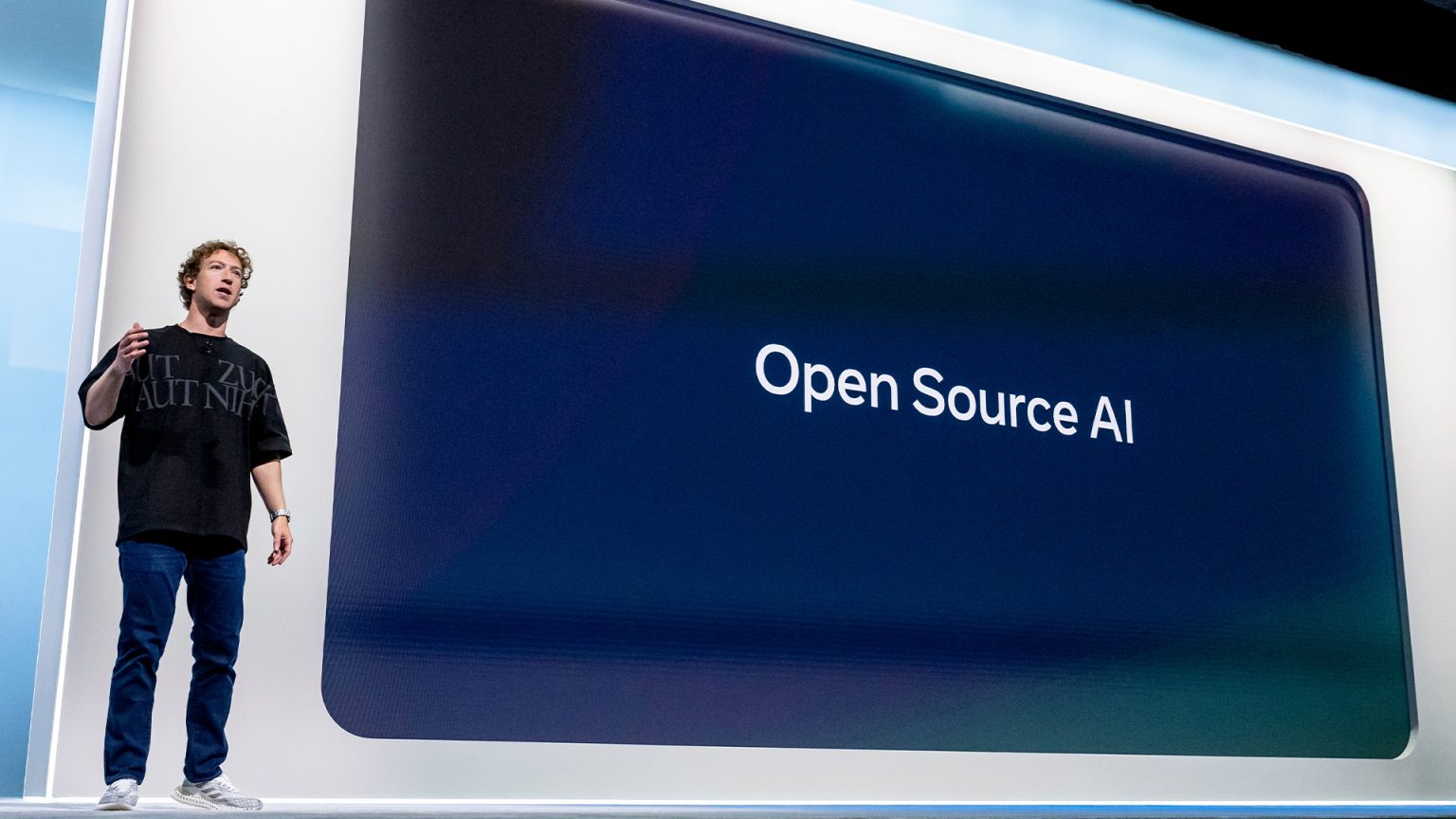
Over the past few years, Meta has taken a fundamentally different approach to artificial intelligence compared to competitors like OpenAI and Google. Instead of building fully closed systems, Meta has heavily invested in “open” AI models—most notably its Llama (Large Language Model Meta AI) family.
- The Llama Strategy: Open Models at Scale
- Democratizing AI Development
- Fueling the Open AI Ecosystem
- Strategic Motivation: Competing Without Lock-In
- The Reality: “Open” but Not Fully Open
- Security and Misuse Risks
- A Strategic Shift Toward Hybrid AI
- Impact on Developers and Startups
- The Global Perspective: Open AI as a Competitive Tool
This strategy has had a profound impact on the global developer ecosystem, lowering barriers to entry, accelerating innovation, and reshaping how AI is built and deployed. However, it also introduces new challenges around security, governance, and the future balance between open and closed AI systems.
The Llama Strategy: Open Models at Scale
Meta’s AI strategy centers around releasing open-weight models like Llama, which developers can download, fine-tune, and deploy independently.
- Llama models range from smaller systems to massive models with hundreds of billions of parameters
- They are designed to be efficient, customizable, and deployable on various hardware setups
- They are widely used by startups, researchers, and enterprises globally
By 2025–2026, Llama became one of the most widely used foundations for open AI development, with many derivative models built on top of it.
This reflects a deliberate strategy:
Instead of monetizing models directly, Meta is commoditizing AI to expand its broader ecosystem.
Democratizing AI Development
One of the most significant impacts of Meta’s approach is democratization.
Before open-weight models:
- Training large AI systems required billions of dollars
- Only a handful of companies could build advanced models
- Developers depended heavily on proprietary APIs
With Llama, this changed dramatically.
Developers can now:
- Download and run models locally or in private clouds
- Fine-tune models for specific industries (legal, healthcare, finance)
- Build AI applications without relying on closed platforms
This has enabled:
- A surge in AI startups
- Increased academic research
- Rapid experimentation and innovation
In fact, a large portion of publicly available AI models today are variants of Llama or derived architectures
Fueling the Open AI Ecosystem
Meta’s investment has helped create an entire open AI ecosystem.


4
Key ecosystem effects include:
1. Explosion of derivative models
Developers adapt Llama models using techniques like LoRA and fine-tuning, creating specialized AI systems for niche use cases.
2. Growth of tooling and platforms
Platforms like Hugging Face, open-source libraries, and model hubs have expanded rapidly around Llama-based development.
3. Increased global participation
Developers from regions without access to large AI infrastructure can now build competitive AI products.
This ecosystem effect is one of Meta’s biggest strategic advantages—it creates network effects without owning the entire stack.
Strategic Motivation: Competing Without Lock-In
Meta’s approach contrasts sharply with competitors:
- OpenAI → API-based, closed models
- Google → integrated ecosystem (Gemini + Cloud)
- Microsoft → enterprise AI platforms (Copilot + Azure)
Meta’s bet is different:
If AI becomes open and widely accessible, no single company can dominate it.
By open-sourcing Llama, Meta:
- Reduces dependence on competitors’ models
- Prevents closed ecosystems from controlling the market
- Positions itself as a foundational layer for AI development
This strategy is often described as “commoditizing intelligence”—making AI widely available while monetizing surrounding platforms like advertising and social apps
The Reality: “Open” but Not Fully Open
Despite being labeled “open-source,” Meta’s models are not fully open in the traditional sense.
- Training data is not publicly disclosed
- Usage is governed by licensing restrictions
- Some organizations face limitations on commercial use
Industry experts often describe Llama as “open-weight” rather than truly open-source
This hybrid model allows Meta to:
- Encourage adoption and innovation
- Maintain some control over usage and risks
Security and Misuse Risks
Open AI models introduce new challenges.
Because they can be freely modified and deployed:
- Safety guardrails can be removed
- Models can be used for malicious purposes
- There is no centralized control over deployment
Recent research highlights that open-source models, including Llama variants, can be adapted for harmful uses such as spam, phishing, or disinformation
This creates a fundamental tension:
- Open models accelerate innovation
- But they also increase security risks
A Strategic Shift Toward Hybrid AI
By 2025–2026, Meta’s strategy appears to be evolving.
Reports indicate that:
- Meta is exploring closed models for its most advanced systems
- Future models may not be fully open
- The company is balancing openness with competitiveness and safety
This suggests a hybrid approach:
- Open models for ecosystem growth
- Closed models for cutting-edge performance
Impact on Developers and Startups
Meta’s open AI strategy has had a direct impact on developers:
Lower barriers to entry
Startups can build AI products without massive capital investment.
Greater control
Companies can run models locally, improving privacy and customization.
Faster innovation cycles
Developers can iterate quickly without waiting for API updates.
Reduced vendor lock-in
Businesses are less dependent on a single provider.
However, there are trade-offs:
- Increased responsibility for security and compliance
- Need for in-house AI expertise
- Infrastructure management challenges
The Global Perspective: Open AI as a Competitive Tool
Open AI is also becoming a geopolitical and economic factor.
Recent reports highlight that open-source AI ecosystems are enabling faster global adoption and competition, particularly in regions investing heavily in AI infrastructure
This suggests that Meta’s strategy may have broader implications:
- Accelerating global AI innovation
- Reducing dominance of a few companies
- Enabling more distributed technological power
Meta’s investment in open AI has fundamentally reshaped the developer ecosystem.
By releasing Llama models and supporting open-weight AI development, the company has:
- Lowered barriers to AI innovation
- Enabled a global developer ecosystem
- Accelerated the pace of AI experimentation
At the same time, challenges around security, governance, and commercialization remain unresolved.
The future of AI may not be fully open—or fully closed.
Instead, as Meta’s evolving strategy suggests, it will likely be a hybrid model, where openness drives innovation, and controlled systems deliver performance and safety.
In that balance, developers—not just companies—are becoming key players in shaping the future of artificial intelligence.