


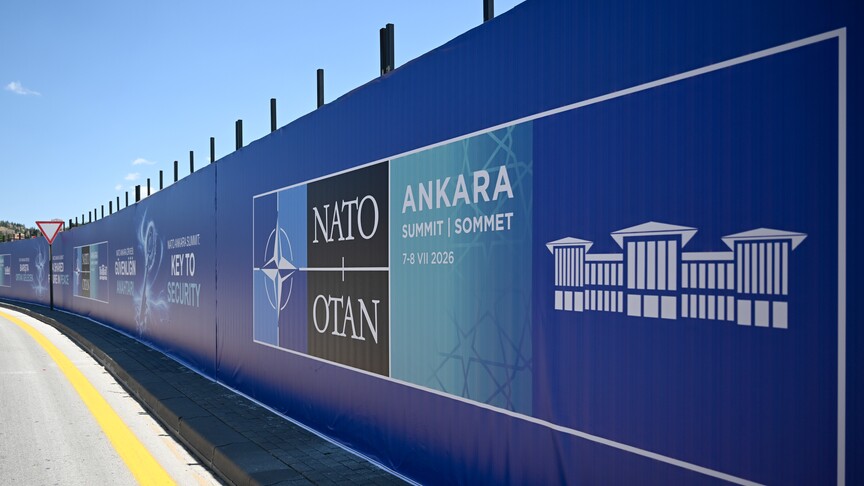
NATO leaders gathered in Ankara, Türkiye, on 7–8 July 2026 for a summit focused on collective defence, military investment, support for Ukraine and the changing global security environment.
The meeting took place at a time of continuing concern about Russia, instability in the Middle East, hybrid threats and increasing strategic competition. NATO members reaffirmed their commitment to Article 5, which states that an attack against one member of the Alliance is considered an attack against all.
Increased Defence Investment
One of the summit’s central themes was the implementation of NATO’s plan for members to invest 5% of their gross domestic product in defence and security by 2035.
According to NATO Secretary General Mark Rutte, European allies and Canada were already investing approximately 4% of GDP in defence and related security measures in 2026. Leaders used the Ankara meeting to present more detailed plans explaining how additional funding would strengthen military readiness, infrastructure and industrial capacity. (NATO)
The summit also included a Defence Industry Forum that brought together government representatives, military officials and industry leaders. Discussions focused on expanding weapons production, encouraging joint procurement and accelerating the development of new technologies, including drones.
Continued Support for Ukraine
Ukraine remained a major priority. NATO allies pledged €70 billion in military equipment, training and other security assistance for Ukraine during 2026. They also expressed an intention to maintain at least a similar level of support in 2027.
The declaration emphasised that Ukraine’s security contributes directly to the security of the entire Euro-Atlantic region. European allies and Canada now finance most of the military assistance provided to the country. (Ankara Summit Declaration)
Broader Security Challenges
NATO leaders also addressed hybrid attacks, cyber threats, terrorism and instability beyond the Alliance’s borders. They stated that Iran must not obtain a nuclear weapon and called for respect for freedom of navigation through the Strait of Hormuz.
Russia continued to be identified as a long-term threat to NATO territory. At the same time, leaders stressed that the Alliance must prepare for security challenges emerging from several different regions and directions.
A Greater European Role
The Ankara Summit demonstrated NATO’s effort to rebalance responsibilities between North America and Europe. European countries and Canada are increasing their defence budgets, expanding production and taking on a larger role in maintaining regional security.
Rutte described this transition as a stronger and more balanced version of the Alliance. The objective is not only to spend more money, but also to turn investment into military capabilities that can be deployed when required.
The Ankara Summit therefore represented an important stage in NATO’s transformation. Its success will ultimately depend on whether member states fulfil their financial promises, expand defence production and maintain long-term unity over Ukraine and other security challenges. (NATO Summit overview)