

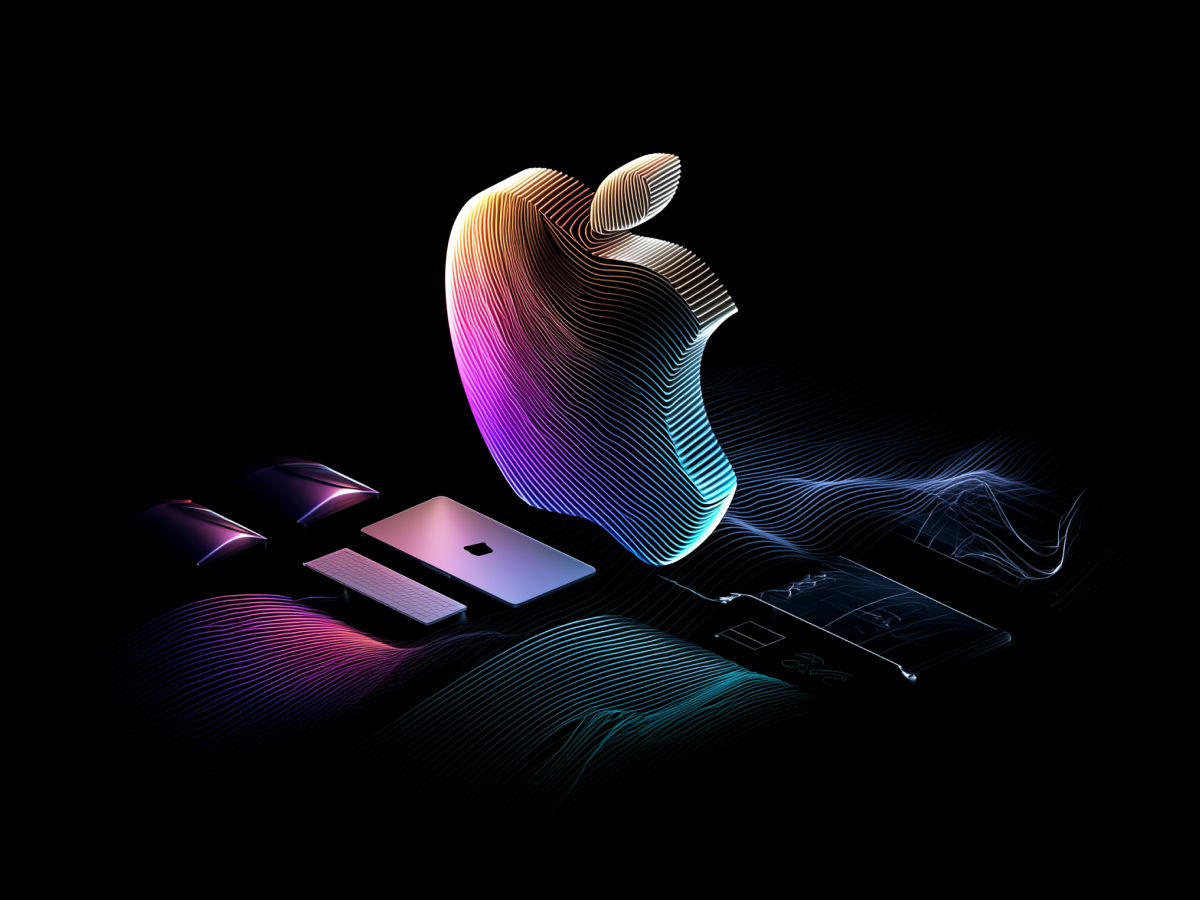
Apple has entered the generative AI era with a fundamentally different strategy than its competitors. Rather than launching standalone AI chatbots, the company is embedding artificial intelligence directly into its operating systems through a platform known as Apple Intelligence.
- Apple Intelligence: AI as a System-Level Feature
- Generative AI in Everyday Tasks
- Siri’s Transformation into an AI Agent
- Privacy-First AI: Apple’s Key Differentiator
- Deep Integration Across the iOS Ecosystem
- Visual Intelligence: AI That Understands the World
- Developer Impact: A New AI Platform Layer
- Hardware and AI: The Apple Silicon Advantage
- Challenges and Limitations
- Competitive Landscape
- The Future of iOS: AI as the Interface
- Conclusion
By 2026, Apple’s approach is reshaping the iOS ecosystem—transforming how users interact with their devices, how developers build applications, and how AI integrates into everyday workflows.
Apple Intelligence: AI as a System-Level Feature
Unlike competitors that focus on standalone apps, Apple integrates AI directly into iOS, iPadOS, and macOS.
Apple Intelligence includes features such as:
- Writing tools for summarizing, rewriting, and generating text
- Smart notification summaries
- AI-powered photo editing and cleanup
- Image generation via Image Playground
- Custom emoji creation (Genmoji)
These features were introduced gradually starting with iOS 18 and expanded through 2025–2026 updates.
The key idea is simple:
AI is not an app—it is a built-in layer across the entire system.
Generative AI in Everyday Tasks
Apple’s generative AI capabilities are designed to enhance daily interactions rather than replace them.
Writing and Communication
AI-powered Writing Tools allow users to:
- Rewrite emails
- Summarize long messages
- Adjust tone and clarity
At the same time, Live Translation enables real-time multilingual communication across Messages, FaceTime, and calls.
Creativity and Expression
Apple also introduced:
- Image Playground for generating images
- Genmoji for creating custom emojis
- AI-assisted content creation tools
These features show Apple’s focus on practical creativity, rather than purely technical AI demonstrations.
Siri’s Transformation into an AI Agent
One of the most significant changes is the evolution of Siri.
Apple is developing a new version of Siri powered by large language models (LLMs), expected to roll out gradually through 2026.
Key improvements include:
- Better natural language understanding
- Context awareness based on personal data
- Ability to perform multi-step tasks across apps
- Integration with generative AI systems
Reports indicate Siri is evolving into a system-wide AI agent capable of controlling apps and executing workflows, not just answering questions.
This marks a major shift:
Siri is moving from a voice assistant to an autonomous interface layer.
Privacy-First AI: Apple’s Key Differentiator
Apple’s AI strategy is built around privacy.
Unlike many competitors, Apple emphasizes:
- On-device processing using local AI models
- Minimal data sharing
- Secure cloud processing only when necessary
This hybrid model—combining on-device AI with secure cloud infrastructure—is designed to balance performance with user privacy.
In practice, this means:
- Many AI features work offline
- Personal data stays on the device
- AI responses are personalized without exposing sensitive information
This approach differentiates Apple in a market where data usage is a major concern.
Deep Integration Across the iOS Ecosystem
Apple is embedding AI across core iOS applications:
- Mail → automatic categorization and summarization
- Messages → smart replies and translation
- Photos → AI editing and object removal
- Shortcuts → AI-driven automation workflows
Developers can also access Apple’s on-device models through new frameworks, enabling them to build AI-powered apps directly within the ecosystem.
This creates a unified experience where:
- AI works consistently across apps
- Features share context and data
- Users interact with AI seamlessly
Visual Intelligence: AI That Understands the World
Another major innovation is Visual Intelligence.
This feature allows users to:
- Analyze images and screenshots
- Identify objects, text, and locations
- Perform contextual searches based on visual input
For example, users can scan a poster and automatically:
- Add events to their calendar
- Identify products or landmarks
- Get contextual information
This reflects a broader trend toward multimodal AI, where systems understand both text and visual input.
Developer Impact: A New AI Platform Layer
Apple is also opening its AI ecosystem to developers.
Key developments include:
- Access to on-device foundation models
- Integration with apps via APIs
- AI-powered automation through Shortcuts
This allows developers to:
- Build privacy-focused AI applications
- Integrate generative AI directly into iOS apps
- Reduce reliance on external AI providers
As a result, Apple is positioning iOS as a self-contained AI platform, not just a consumer operating system.
Hardware and AI: The Apple Silicon Advantage
Apple’s AI strategy is closely tied to its hardware.
- Apple devices use Neural Engine (NPU) chips
- AI processing is optimized for Apple Silicon (A-series, M-series)
- Many features require newer devices (e.g., iPhone 15 Pro and later)
This tight integration allows Apple to:
- Run AI models efficiently on-device
- Reduce latency
- Improve battery performance
It also creates a competitive advantage:
Apple controls both hardware and AI software in a unified system.
Challenges and Limitations
Despite progress, Apple faces several challenges:
Slower rollout compared to competitors
Apple entered the generative AI race later than OpenAI and Google.
Limited device support
Many AI features require newer hardware, limiting adoption.
Siri delays
Some advanced AI features for Siri have been postponed to 2026, reflecting development complexity.
Balancing privacy and performance
On-device AI can be less powerful than cloud-based models.
Competitive Landscape
Apple’s AI strategy puts it in direct competition with:
- OpenAI (ChatGPT ecosystem)
- Google (Gemini + Android + Search)
- Microsoft (Copilot + Windows + Office)
However, Apple’s approach is unique:
- Deep ecosystem integration
- Privacy-first architecture
- Hardware-software optimization
Instead of competing on raw model performance, Apple focuses on user experience and ecosystem control.
The Future of iOS: AI as the Interface
Apple’s long-term vision is clear:
- AI becomes the primary interface for interacting with devices
- Apps become less important than outcomes
- Users interact through natural language and context
With Siri evolving into an AI agent and Apple Intelligence expanding across the system, iOS is moving toward:
A fully AI-native operating system.
Conclusion
Apple’s exploration of generative AI is not about building the most powerful model—it is about redefining how AI fits into everyday life.
Through Apple Intelligence, the company is:
- Embedding AI across its ecosystem
- Prioritizing privacy and on-device processing
- Transforming Siri into an intelligent agent
- Enabling developers to build AI-powered applications
While the rollout is gradual, the impact is significant.
Apple is not just adding AI to iOS.
It is redesigning the operating system around it.